Skip to content
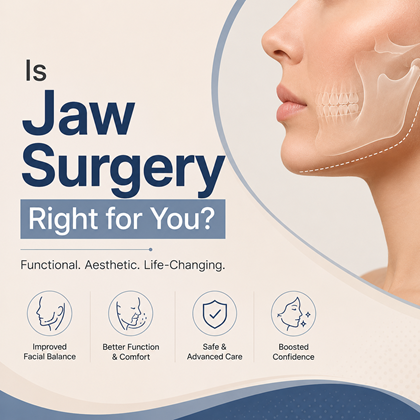
Jaw alignment is crucial to facial appearance and other daily activities like eating, speaking, and breathing. Improperly aligned upper and lower jaws may lead to functional issues and affect facial balance. If you have these problems, you may ask yourself, Is Jaw Surgery Right for You?
The purpose of jaw surgery (or orthognathic surgery) is to correct irregularities of the jaws, enhance facial harmony, and restore proper function of the jaws. Dr. Huma Abbasi at Incisions Clinic offers customized treatment plans for patients to optimize both function and aesthetics following the most advanced jaw surgery procedures.
What Is Jaw Surgery?
Corrective surgery (jaw surgery) repositions the upper jaw, lower jaw, or both to enhance the alignment of the jaw. It is suggested for patients where the jaw issues are not correctable by orthodontic treatment only.
The treatment is designed to increase the fit between the jaws, making all daily life functions (eating, speaking, breathing) easier and more comfortable for the person, and to improve the symmetry of the face.
Is Jaw Surgery Right for You?
One of the most common questions patients pose is, “Is Jaw Surgery Right for You? This will depend on how bad your jaw is, what symptoms you are having, and what you are trying to achieve. Surgery may be the best permanent treatment if your jaw alignment is causing functional issues or impacting quality of life.
Your surgeon will conduct a comprehensive assessment before your surgery, which may involve a physical exam, imaging tests, and a discussion of your medical history and expectations.
Signs You May Need Jaw Surgery
If you have any of the following symptoms, you may need to have jaw surgery:
- Difficulty chewing food
- Issues with closing the mouth and biting correctly
- Chronic jaw pain
- Recurrent headaches due to a misaligned jaw
- Speech difficulties
- Facial asymmetry
- An underbite or overbite
- Problems with breathing, such as sleep apnea
- Difficulty swallowing
- Overwear of the teeth.
These problems in daily life are a clear sign that you need to see a surgeon who has experience performing this type of surgery.
Common Conditions Treated with Jaw Surgery
Jaw surgery can address a variety of structural problems, including:
Overbite
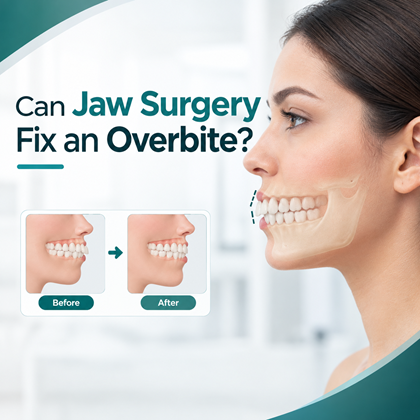
Overbite is when the upper teeth protrude excessively over the lower teeth, which can influence the person’s look and function.
Underbite
Underbite occurs when the bottom jaw extends beyond the top jaw, making it more difficult to chew or talk.
Open Bite
An open bite is a condition in which the front teeth do not close properly, which may cause people to have trouble speaking and eating.
Facial Asymmetry
If the jaw is not developed evenly, jaw surgery may help restore balance to the face.
Obstructive Sleep Apnea
In selected cases, adjustments can be made to the jaw position to help open up the airway and decrease OSA symptoms.
What Are The Benefits of Jaw Surgery?
Jaw surgery has many benefits both functional and cosmetic, that will last a long time.
These include:
- Improved chewing ability
- Better speech
- Enhanced facial symmetry
- Reduced jaw pain
- Easier breathing
- Improved bite alignment
- Better oral health
- Increased self-confidence
The treatment results in many patients feeling better about themselves and enjoying a better quality of life.
What Happens During the Procedure?
The surgical procedure depends upon the individual’s condition. During jaw surgery, the surgeon carefully repositions the jawbones into their ideal position. The bones are usually supported while healing with small plates and screws. The surgery is done under general anesthesia in a hospital.
Recovery After Jaw Surgery
The recovery takes time, but most patients will be back to normal activities within a few weeks.
During the healing period, you may experience:
- Swelling
- Bruising
- Mild discomfort
- Temporary difficulty chewing
- Limited jaw movement
Your surgeon will give you a lot of information about how you will recover, what you can eat, how to handle pain, and when to make follow-up visits. Patients usually start on a liquid or soft-food diet before making a transition to a normal diet as they heal.
Who Is a Good Candidate?
Jaw surgery may be suitable for individuals who:
- Have finished growing and have a fully formed jaw joint
- Feel pain or difficulty in the jaw.
- Have trouble chewing or pain in the jaw.
- Be sure to have severe bite misalignment
- Experience general good health
- Have realistic expectations
- Are dedicated to the process of recovery
You also may require orthodontics prior to and following surgery for optimal results.
Cost of Jaw Surgery
The cost of jaw surgery in Islamabad typically ranges from PKR 500,000 to PKR 1,000,000. The price may vary based on:
- Surgical complexity
- One or both jaws treated
- Diagnostic scans
- Surgeon’s expertise
- Anesthesia and hospital charges
At Incisions Clinic, Dr. Huma Abbasi evaluates your jaw condition and provides a personalized treatment plan with an exact cost estimate.
Why Choose Incisions Clinic?
In finding a clinic, one of the most crucial decisions to make is selecting the right clinic. At Incisions Clinic, patients are treated according to their individual needs, and modern surgical methods are employed, which are supported by advanced diagnostic tools.
Before developing a personalized surgical treatment plan, Dr.Huma Abbasi meticulously examines each patient’s facial structure, jaw function, and treatment objectives. Precision, patient safety, and natural facial harmony are her focus, leading to optimal functional and cosmetic results.
Final Thoughts
But many people ask themselves, “Is Jaw Surgery Right for You? Corrective jaw surgery may be a long-term solution if your jaw misalignment is interfering with your ability to eat, talk, breathe, or smile with confidence. The surgery will improve not only the function of the jaws but will also provide better balance to the face and a better quality of life.
Make an appointment with Dr. Huma Abbasi at Incisions Clinic. She will evaluate your case, discuss your options for treatment, and develop a plan tailored to your individual needs to restore function, facial balance, and self-confidence for a better bite in the long run.