Skip to content

Eye bags are an issue. Even with a restful night’s sleep, they can make the face look tired. Under-eye puffiness can be temporary for some and can be associated with fluid retention, allergies, sleep deficits, or lifestyle. In other cases, eye bags are linked to genetics, ageing, excess skin or fat around the eye area.
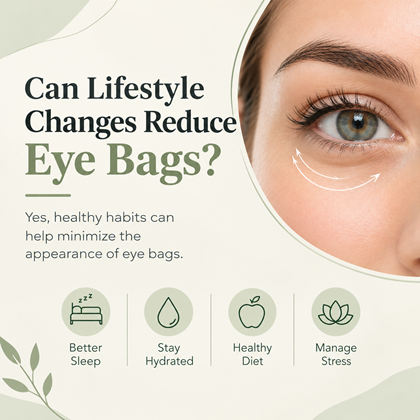
This brings up a significant question: Can Lifestyle Changes Reduce Eye Bags? The answer is dependent on their causes. While adopting a healthy lifestyle can help to minimize temporary swelling, it might not eliminate the appearance of “eye bags.”
Get Enough Sleep
Poor sleep can make the eye area appear more goopy and swollen. Adults need 7-9 hours of sleep per night. A regular bedtime routine will also benefit sleep quality. If your eye bags get worse after a few late nights, improving your sleep habits might help reduce the appearance of those pesky eye bags.
Reduce Excess Salt
Can Lifestyle Changes Reduce Eye Bags? An excess of salt in the diet can lead to water retention. This can cause the eye to appear more swollen. Temporary puffiness can be helped by cutting out very salty foods and eating a balanced diet. But this doesn’t imply that salt-free living is going to eliminate permanent eye bags. Rather, it can assist to minimize swelling caused by fluid.
Stay Hydrated
Adequate hydration helps to keep the body in balance and contributes to healthy skin. Dried-out skin can make under-eye problems more prominent, and your eyes might look dull and fatigued. But excessive water consumption will not get rid of fat pads or any loose skin under the eyes.
Managing Allergies
Swelling and dark circles around the eyes can be caused by allergies. Allergy treatment will then help to bring the area back to a better appearance. If eye puffiness is accompanied by itching, congestion, sneezing, or other allergy symptoms, talk with your health care professional about appropriate treatment. Don’t rub your eyes, as rubbing them too often can irritate the soft skin around them.
Avoid Smoking
Smoking can have a detrimental impact on skin health and collagen. Smoking can cause a decrease in collagen production and make the skin around the eyes appear thinner. There are numerous health benefits to quitting smoking, and over time, your skin may look better.
Protecting Your Skin From the Sun
The skin around the eyes is thin. Using sunscreen consistently will help prevent damage that can lead to skin aging. Wearing a proper sun protection product and sunglasses will help to minimize damage to adjacent skin. A skin care regimen may enhance the look of the skin, but it won’t help to eliminate excess fat or skin that is producing structural eye bags.
Can Lifestyle Changes Completely Remove Eye Bags?
Is Reducing Eye Bags possible with lifestyle changes? They may help to diminish temporary swelling. But if your eye bags result from your genes, the aging process, surplus skin, or visible fat pads, changing your lifestyle may not completely fix the problem.
Under-eye bags are due to the movement of fat behind the eye that extends forward with age. Medical or surgical intervention may be necessary for more substantial changes to the structure.
When Is Eye Bag Removal Considered?
Even after taking care of the eyes, if eye bags persist, a consultation can help determine the cause.
Treatment options vary from skin care to non-surgical treatments to eyelid surgery. A lower blepharoplasty may be performed on the lower eyelids to deal with lower eyelid skin and fat. The exact technique used will depend on the patient’s anatomy.
Dr. Naveera Rafique will be able to evaluate the under-eye area and can talk about the various treatment options that he or she can provide based on the concerns and your facial structure at Incisions Clinic.
Final Thoughts
Can Lifestyle Changes Reduce Eye Bags? The following healthy habits can help alleviate temporary puffiness from poor sleep, fluid retention, allergies, and lifestyle practices. But they can’t get rid of permanent eye bags that are brought on by ageing, genes, excess skin, or a change in under-eye fat.
Even after making lifestyle changes, if the eye bags persist, it is important to have a professional evaluation to find out why they are occurring and what options are available for treatment.