
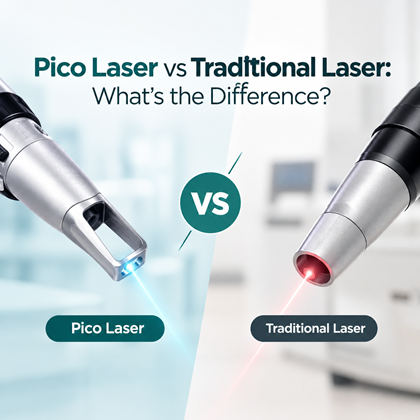
Laser treatments are now a popular choice to treat pigmentation, acne scarring, uneven skin tone, sun damage, and other skin issues. However, with newer technologies in the market, many people are not sure about the difference between the Pico laser and the traditional laser and which of the two might be better for their skin.
Both technologies employ controlled laser energy, but they deliver it differently, and it interacts with the skin in different ways. Knowing these differences can help you select a treatment that addresses your skin concern, and not just the latest gadget.
What Is Pico Laser?
Pico laser is a high-tech laser system that has a very short pulse width of the laser beam and only a very small amount of energy. Practitioners can direct these high-pulsed power bursts at pigment to create a photoacoustic effect, which helps break down unwanted pigment without excessively heating surrounding tissue.
Aestheticians frequently use a pico laser to treat issues like pigmentation, freckles, sunspots, acne marks, some acne scars, and tattoo pigmentation. You can also use this treatment to rejuvenate the skin and enhance skin texture. Pico laser has been added to Incisions’ comprehensive skin and laser treatments.
What Is Traditional Laser Treatment?
The term ‘traditional laser treatment’ is used to refer to several different laser systems. Traditional lasers can operate based on heat, controlled energy, or other factors depending on the wavelength and the technology, to target pigment, damaged skin, blood vessels, and/or stimulate skin remodeling.
These can include fractional lasers, Q-switched lasers, and other resurfacing treatments. Each one serves a different purpose; you apply them in different ways; they take different amounts of time to recover; and dermatologists recommend them for various skin issues. Thus, practitioners do not use the term ‘traditional laser’ to describe a single laser. The treatment and skin type will determine which laser they use.
Pico Laser vs Traditional Laser: What’s the Difference?
The primary differences between the pico laser and traditional lasers are the duration of the pulses, the mechanism of treatment, the targeted concern, and the downtime.
Pico lasers come with very short pulses of light, which create smaller particles from the pigment, requiring less heat. Depending on the laser system, traditional systems need more thermal energy.
Though providers often mention the likelihood of minimal downtime with the use of the pico laser, it may still cause some redness, swelling, or sensitivity. Some of the more traditional resurfacing lasers can cause more significant redness and peeling, especially for deeper skin issues. There is no clear-cut winner with either technology. Lasers that work well for one concern may not be appropriate for another.
Which Laser Is Better for Pigmentation?
Pico laser is a good choice for pigmentation issues as it is capable of hitting pigment particles with a short pulse. It may be used for freckles, sunspots, and some types of uneven pigmentation.
But pigmentation is complicated. For example, melasma can be challenging to treat and may need a multi-pronged approach with sun protection, topicals, and appropriate procedures.
Which Is Better for Acne Scars?
Pico Laser vs Traditional Laser: What’s the Difference? The decision between a Pico laser or a traditional laser for acne scars will depend on the acne scar type and depth.
Certain acne marks and texture issues may be improved with the use of a Pico laser. For deeper textural scars, traditional fractional laser treatments may be used as they can encourage skin remodeling. There may be some differences in treatment if you have rolling, boxcar, or ice-pick scars. Doctors sometimes use laser resurfacing in conjunction with other procedures like subcision or microneedling.
Does Pico Laser Have Less Downtime?
Patients prefer Pico Laser in part due to its comparatively short recovery period. After treatment, there may be mild redness, warmth, or swelling, which can clear up fairly quickly.
The time of recovery after the traditional laser treatment is different. For superficial treatments, there’s little downtime, but more intensive resurfacing treatments may result in a few days of redness, peeling, or skin sensitivity.
Your provider should let you know what to expect during recovery depending on the laser system and settings they are using.
How Many Sessions Are Needed?
The condition being treated and the skin’s reaction determine the number of sessions. Patients may need multiple sessions for pigmentation, acne scars, melasma, and tattoo removal.
Dr. Ushna Afzal is one of the best aesthetic physicians in Islamabad. She can examine your skin and create a treatment plan tailored to your specific requirements.
Pico Laser Treatment Cost
The cost of pico laser treatment in Islamabad may start from approximately PKR 12,000 per session and can reach PKR 45,000+, depending on the treatment area and skin concern. Current Islamabad pricing sources report this broad range for pico laser sessions. Factors include:
- Type of laser technology used
- Treatment area and size
- Skin concern and severity
- Number of sessions required
- Doctor’s expertise
- Clinic facilities and equipment
- Follow-up care
At Incisions, Dr. Ushna Afzal can assess your skin, recommend a suitable laser treatment, and provide an accurate cost estimate.
How Do I Choose the Right Technology?
You should use your skin type, condition, and desired outcome to decide between the pico laser and the traditional laser. Advanced technology can provide great solutions; however, not all advanced technology is good for all concerns.
A professional assessment can help identify the right wavelength, energy settings, sessions, and aftercare program. This individualized approach can also contribute to a decrease in unnecessary therapy and increased safety.
Final Thoughts
When deciding between Pico laser and traditional laser treatment, the skin concern, treatment goal, skin type, and downtime are all factors to consider. A traditional laser system might be more effective than a Pico laser, depending on the pigmentation and type of rejuvenation. Dr. Ushna Afzal at Incisions will be able to determine which laser treatment is right for your skin.
