
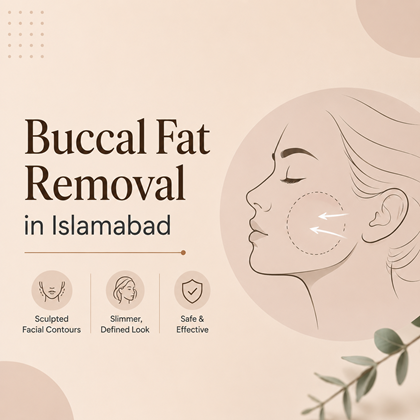
A rounder, or fuller, face can be made to look youthful. But some people think that it renders the lower cheeks too full and conceals their cheekbones and facial contours. Genetics and facial anatomy can make the buccal fat pads difficult to lose, even with exercise and weight loss.
If you’re looking for a more streamlined and sculpted face, then you might be a good candidate for Buccal Fat Removal in Islamabad. This surgery is often referred to as buccal lipectomy, bichectomy surgery, or cheek fat removal, involves the extraction of a precise amount of fat from the inner cheeks, enhancing the face’s contours.
Dr. Naveera Rafique at Incisions Clinic offers customized facial contouring treatments to match the facial structure and desired appearance of every patient. Before recommending surgery, she takes a close look at facial proportions so as not to remove too much cheek fat, which would result in a too-hollowed-out look. So, it’s not just about losing fat; it’s about achieving a balanced, natural-looking facial contour.
Quick Facts
- Treatment Type: Cosmetic facial surgery
- Also Known As: Buccal lipectomy, bichectomy, cheek fat removal
- Purpose: Reduces excess fullness in the lower cheeks
- Target Area: Buccal fat pads inside the cheeks
- Procedure Time: Usually around 30–60 minutes
- Incision Location: Inside the mouth
- Visible External Scars: Usually none
- Anesthesia: Local anesthesia or other suitable option
- Downtime: Varies according to individual healing
- Results: Develops gradually as swelling decreases
- Ideal For: Suitable for adults with persistent lower-cheek fullness
What Is Buccal Fat Removal?
Buccal fat removal is a cosmetic surgical procedure that reduces excess fullness in the lower cheek area. A small, well-circumscribed area of the buccal fat pad, deep within each cheek, is removed by the surgeon.
Buccal fat pads are found in everyone. But each person’s size is different. Others may have larger fat pads and thus have a round, or “baby face” look, despite having a healthy body weight.
During buccal fat removal surgery, the surgeon will make a small incision in the mouth and gently extract the appropriate amount of fat. The incision is made within the cheek, and as such, it does not leave a facial scar.
What Is the Buccal Fat Pad?
The buccal fat pad is an area of fat that occurs naturally in the deep cheek. It is located between the facial muscles and provides facial form and fullness to the mid/lower face.
In contrast to body fat, the size of the buccal fat pad varies only slightly when diet and exercise are adjusted in normal-fat individuals. In fact, the buccal fat pad size is not necessarily easily changed by diet and exercise. This means that a person can be thin but have full-looking cheeks.
However, Buccal fat is also responsible for giving the face a youthful fullness. So surgeons have to be very careful in choosing patients and not remove too much fat, or else it could be a problem.
What Concerns Can Buccal Fat Removal Address?
Patients who have experienced successful buccal fat removal may have:
- Full or chubby cheeks (naturally so)
- Persistent lower-cheek fullness
- Facial shape that is round.
- Limited cheekbone definition
- Skin that still looks full despite a reduced weight level.
But sometimes people with round faces don’t require buccal fat removal. Facial shape can also be influenced by other factors like the structure of the jaws, muscle size, skin laxity, or the distribution of fat around the face.
How Does Buccal Fat Removal Slim the Face?
Buccal fat removal aims to slim the lower cheeks. The procedure can also help to make the cheekbones and jawline more defined, because it decreases the size of the buccal fat pads.
The face can slowly show signs of swelling as swelling subsides:
- More sculpted
- Less rounded
- Better defined
- More balanced
- Slimmed down bottom cheeks
But the results need to be subtle and proportionate. However, if too much fat is removed, there can be too much hollowness, particularly as the face naturally loses volume as you age.
That’s why, at Incisions Clinic, Dr. Naveera Rafique approaches patients conservatively and on a case-by-case basis.
Who Is a Good Candidate for Buccal Fat Removal?
You may be a suitable candidate for cheek fat removal surgery if you:
- Are well enough to be cared for at home.
- Have naturally prominent buccal fat pads
- Experiencing round cheeks even after weight is stable
- Looking for a better facial contour?Desiring a more sculptural face?
- Have realistic expectations
- Avoid smoking or follow the surgeon’s advice on smoking.
- Be aware of the possible benefits and downsides of surgery
It may not work for individuals with a naturally thin, narrow, or hollow face. Furthermore, older patients tend to have less volume in the face, and younger patients must think about the long-term outcomes of eliminating cheek fat.
Best Surgeon for Buccal Fat Removal in Islamabad
For any questions regarding buccal fat removal surgery in Islamabad, contact the Best Surgeon in Islamabad for more information. The experience of the surgeon is a crucial factor in creating well-balanced facial contouring results. Great attention must be paid to facial anatomy when performing buccal fat removal, as important nerves, muscles, and salivary structures are adjacent to the treatment area.
Dr. Naveera Rafique offers custom facial surgery solutions where harmony and natural beauty take priority at Incisions Clinic. She does not just remove as much fat as possible, but takes into account the patient’s overall facial shape and how it will look over time.
Her customized approach is to enhance facial definition to avoid an artificial or overly hollow appearance.
Step by Step Procedure of Buccal Fat Removal
The exact surgical plan may vary according to the patient’s anatomy and needs. However, the procedure generally involves the following steps:
- Pre-Surgical Assessment: Dr. Naveera Rafique reviews the treatment plan and examines the cheeks before starting the procedure.
- Anesthesia: The appropriate anesthesia is administered to keep the patient comfortable during surgery.
- Incision Inside the Mouth: A small incision is made on the inner side of each cheek. Therefore, the procedure generally does not create visible external facial scars.
- Accessing the Buccal Fat Pad: The surgeon carefully reaches the buccal fat pad while protecting the surrounding structures.
- Controlled Fat Removal: An appropriate amount of fat is gently removed according to the patient’s facial anatomy and desired contour.
- Checking Facial Balance: The surgeon evaluates both sides to maintain natural facial proportions and symmetry.
- Closing the Incisions: The internal incisions are closed, commonly with dissolvable sutures when appropriate.
The procedure usually takes around 30 to 60 minutes, although the exact duration may vary.
Does Buccal Fat Removal Hurt?
Appropriate anesthesia is used during the procedure, which helps minimize discomfort to the patient. After surgery, there may be some pain, tightness, tenderness, or swelling in the inner cheeks.
Your doctor may prescribe some pain medication and recommend recovery guidelines to help ease pain after your surgery.
Above all, patients should be careful to follow all after-surgery instructions very well, as the incisions will be inside the mouth.
Benefits of Buccal Fat Removal
Properly contours the lower jaw to create a more streamlined facial shape
- Tightens and lifts cheekbones to diminish fullness
- Improves facial definition
- May improve the texture of the cheeks’ contour
- Does not leave an easily visible external surgical scar
- Provides long-lasting changes to the treated fat pads
- Can enhance the overall facial shape
- Has relatively small internal incisions that require repair.
However, individual results may differ. So, it’s important to have reasonable expectations and patient selection.
When Will You See the Results?
The first difference you may see after surgery is that. At times, the final contour may be obscured by swelling. As the tissues begin to heal and, with time, the swelling subsides, the cheeks start to take shape. Final results may be delayed for several weeks or more. Stable body weight can also help keep the facial proportions intact after surgery.
Buccal Fat Removal Recovery
People heal differently after having buccal fat removal. The surgeon will make incisions within the mouth; therefore, it is important to maintain good oral hygiene and follow the surgeon’s instructions closely.
In the first couple of days, you may experience:
- Oedema of the cheeks
- Mild bruising
- Tenderness or soreness
- Mouth tightness (feeling constricted in the mouth)
- Temporary facial fullness
- Some slight pain when eating.Some pain while eating.
Surprisingly, the swelling around your face may give it a more plump appearance at first. So don’t evaluate your final results in the recovery phase. As the swelling slowly reduces, your new facial outlines will be seen.
Buccal Fat Removal Recovery Timeline
The healing process for buccal fat removal is brief. Recovery from buccal fat removal is a short process.
First Few Days
Swelling and tenderness typically are most prominent during the early recovery phase. Depending on your surgeon’s orders, you may need to follow a soft or liquid diet.
First Week
As swelling improves, many patients will begin to feel more comfortable. However, some puffiness is likely to persist in the face.
Two to Three Weeks
There is a progressive decrease in swelling, which is most apparent in the eye area, and the cheeks start to get thinner. Depending on your recovery and the type of work, you may return to most normal activities earlier.
Following Months
As the tissues settle further, and the end facial shape becomes clearer. Depending on how quickly you heal, you will have follow-up appointments with your surgeon to track your healing progress.
What Can You Eat After Buccal Fat Removal?
During the initial recovery period, diet is a large part of your recovery, as the incisions will be inside the mouth. Dr. Naveera Rafique might suggest liquids or soft foods at first.
As per your customized directions, appropriate choices might be:
- Smooth soups
- Yogurt
- Mashed foods
- Soft eggs
- Other easy-to-chew foods
Refrain from hard, crunchy, spicy, or irritating foods until you can get back to your regular diet, as advised by your surgeon. In addition, use all mouth rinsing and oral hygiene instructions to ensure that the surgical site remains clean.
Aftercare Following Buccal Fat Removal
Comfort, healing, and minimizing the risk of complications can occur through proper aftercare. Following surgery, the following should be done:
Immediately obey any orders given by Dr. Naveera Rafique.
- Follow medication as directed.
- Maintain good oral hygiene.
- Use any recommended mouthwash.
- Follow the Diet that is recommended for you.
- Don’t touch the incisions.
- Don’t smoke during the healing phase.
- Follow-up appointments should be attended.
In addition, seek out the clinic if you experience symptoms that are unusual or worsen during recovery.
Are Buccal Fat Removal Results Permanent?
Fat cells that are excised during buccal fat removal surgery do not regenerate the same way. The process can give a permanent volume boost to the cheeks.
Your face will still naturally change as you get older, though. Weight loss or gain, especially in the face, can also impact the overall fullness. The stability of weight is therefore important; in this regard, the maintenance of balanced facial contours can be preserved using weight maintenance. To this end, weight maintenance may help preserve balanced facial contours.
Before and After Results Of Buccal Fat Removal
Every individual will have a different facial structure; hence, the difference in buccal fat removal results before and after. Some patients may have a slight loss of fullness in the cheeks; some may have a little more definition in the face.
Successful outcomes might include:
- Reduced lower-cheek fullness
- The cheekbone is more defined
- A more streamlined look for the face
- Sculpted-looking face
But fat removal in the mouth won’t alter your bone structure entirely. It is rather a way to enhance the already present face proportions.
Risks and Possible Side Effects
As with all surgical procedures, there are risks associated with buccal fat removal. There is usually some temporary swelling, soreness, and bruising during recovery.
Other potential problems can include:
- Infection
- Bleeding
- Facial asymmetry
- Prolonged swelling
- Numbness
- Damage to nearby structures
- Excessive cheek hollowness
- Unsatisfactory cosmetic results
Adopting the necessary pre- and post-operative measures and selecting a surgeon with experience in the procedure can minimize unnecessary risks.
Can Buccal Fat Removal Make You Look Older?
The buccal fat is a natural fat that adds to the volume of your face. However, in older adults, excessive removal can cause the face to become hollow over time, as there is a tendency for the fullness to diminish with age.
Thus, it is not suitable for everyone. Patients with narrow or thin faces may not be good candidates.
Dr. Naveera Rafique thoroughly assesses the whole face and then recommends surgery at Incisions Clinic. While trying to eliminate fat, her approach is to control it.
Buccal Fat Removal Cost in Islamabad
The cost of Buccal Fat Removal in Islamabad starts from PKR 120,000 and PKR 200,000. However, the cost varies according to each patient’s surgical needs. Since every face has different proportions and treatment requirements, the final cost usually depends on several factors.
These may include:
- Surgeon’s expertise
- Complexity of the procedure
- Types of anesthesia
- Clinical facilities
- Pre-operative assessment
- Individual surgical plan
- Follow-up care
During your consultation at Incisions Clinic, Dr. Naveera Rafique will assess your facial structure and explain the recommended treatment plan. After this evaluation, the clinic can provide a personalized cost estimate.
When considering buccal fat removal cost in Islamabad, patients should focus on the surgeon’s expertise, safety, and quality of care rather than choosing a procedure based only on the lowest price.
Why Choose Dr. Naveera Rafique?
Dr. Naveera Rafique offers one-on-one cosmetic surgery treatments at Incisions Clinic. She employs a careful selection of patients, facial harmony, and a controlled fat removal approach with buccal fat removal.
She doesn’t just look at the cheeks; she takes into account the cheekbones and jawline, the width of the face, and overall proportions. As a result, she can develop an operation plan that fits with the patient’s natural attributes.
She has a thorough consultation process, which also enables patients to understand the procedure, how they will recover, what the risks are, and what the results will be before they can decide.
Final Thoughts
Buccal Fat Removal in Islamabad can be beneficial for those who are suitable to make their face look more defined and eliminate lower cheek fat. But the key to successful treatment is more than just removing as much fat as possible. Balanced, natural-looking results require careful selection of patients and conservative surgical planning.
Dr. Naveera Rafique reviews the facial architecture of every patient and devises a treatment strategy that is unique to each patient. Her techniques aim to enhance facial balance and harmony while maintaining natural volume and long-term balance.
Book a Consultation
Buccal fat removal may be right for you if you have naturally full cheeks, which may not change much with weight loss and make you feel self-conscious.
Make appointments at Incisions Clinic with Dr. Naveera Rafique. At your appointment, you may ask about the issues you have with your face, what you want to see after your surgery, how you will feel after surgery, any potential complications, and your unique surgical plan.
Will I have visible scars?
The surgeon generally places the incisions inside the mouth. Therefore, buccal fat removal usually does not leave visible external facial scars.
How long does buccal fat removal take?
The procedure commonly takes around 30 to 60 minutes. However, the exact duration depends on the individual surgical plan.
When can I return to work?
Many patients return to work after the early recovery period. However, swelling may remain visible for some time, and individual recovery varies.
Can buccal fat removal fix a double chin?
No. Buccal fat removal targets fat inside the cheeks. A double chin may require a different treatment, such as submental liposuction or another suitable contouring procedure.
Can buccal fat grow back?
The removed fat cells do not typically regenerate. However, significant weight gain can affect other fat cells and change overall facial fullness.
Does buccal fat removal make the cheekbones more visible?
Reducing lower-cheek fullness may improve the appearance of cheekbone definition in suitable candidates. However, results depend on your natural bone structure.
What is the best age for buccal fat removal?
There is no single ideal age. The surgeon considers facial development, current cheek volume, long-term aging, and overall suitability before recommending surgery.
